Is Partisan Bias Present in Historical Research?
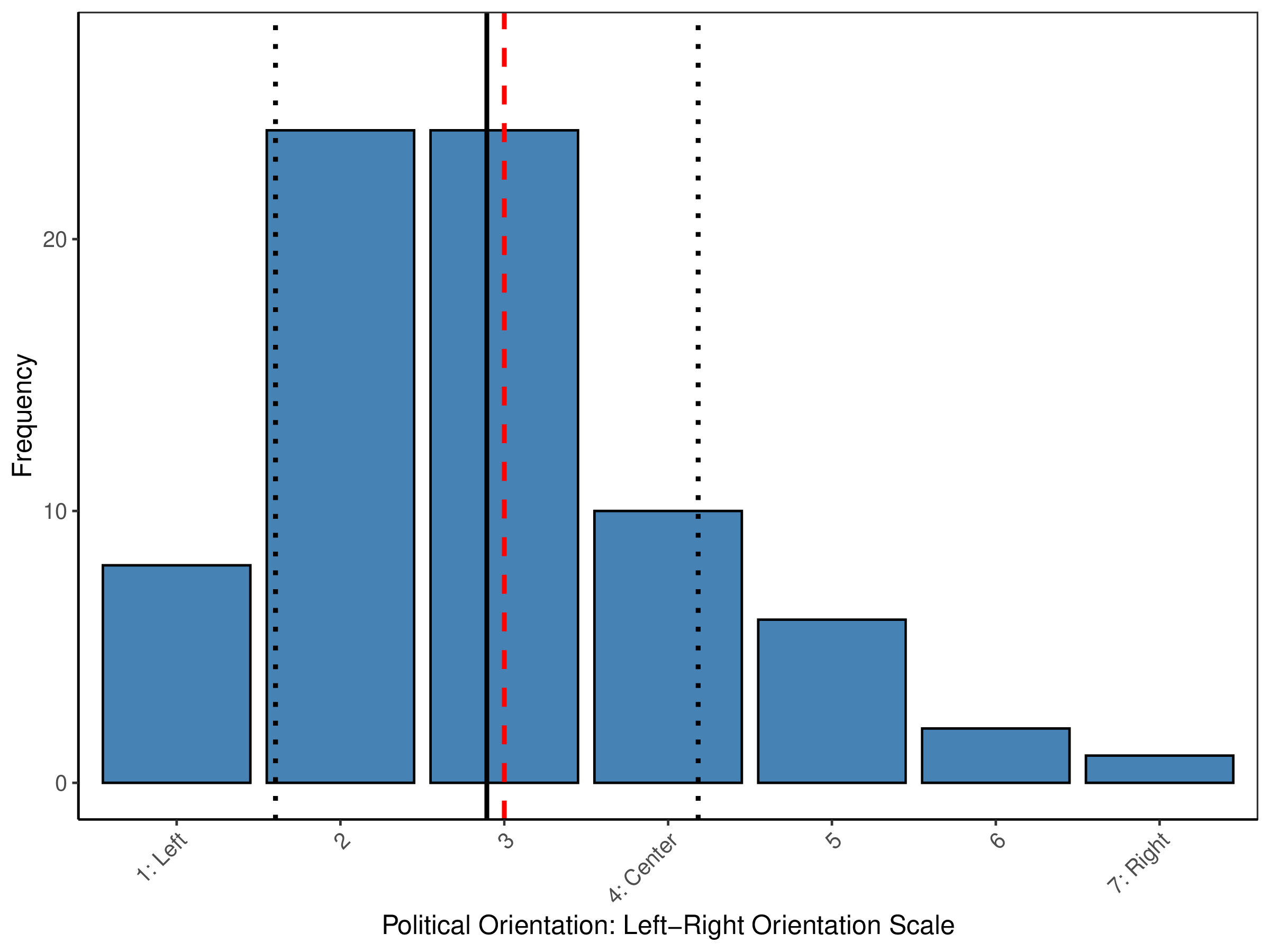
Our paper in F1000Research investigates whether historians prefer contemporary history abstracts that align with their political orientation. In an online experiment, 75 historians evaluated 17 fictitious abstract pairs varying in political stance. We find a significant interaction: left-leaning historians prefer progressive abstracts, right-leaning historians prefer conservative ones, and moderate historians show no preference. Deliberation does not diminish this bias.
| 📄 Paper (F1000Research) | 📝 Preregistration (OSF) | 💻 Code & Data (GitHub) |
Motivation: Political preferences in science
In quantitative research, publication bias—the selective publication of studies based on factors other than research quality—is well documented
A classic survey by Kimball
Method: A within-subjects experiment with historians
Experimental design
We recruited 75 historians globally (from 7,063 contacted) to evaluate 17 fictitious contemporary history abstracts in an online experiment. Each abstract existed in two versions—progressive and conservative—that were identical except for the political framing. Each participant saw one version of each pair (9 progressive, 8 conservative), presented in randomized order.
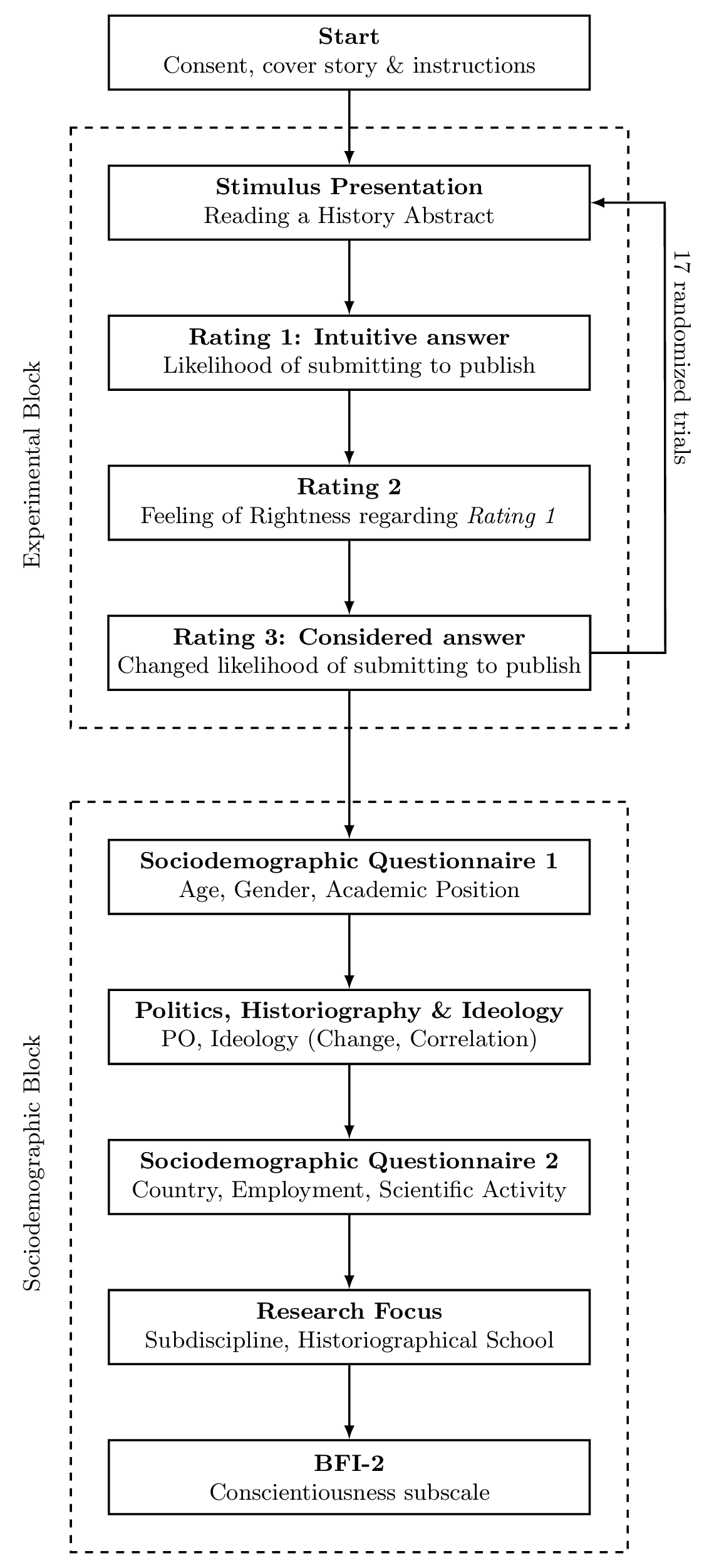
Two-response paradigm
Drawing on Dual Process Theory
Political orientation was measured on a 7-point left-right scale
Results
Political stance shapes publishability judgments
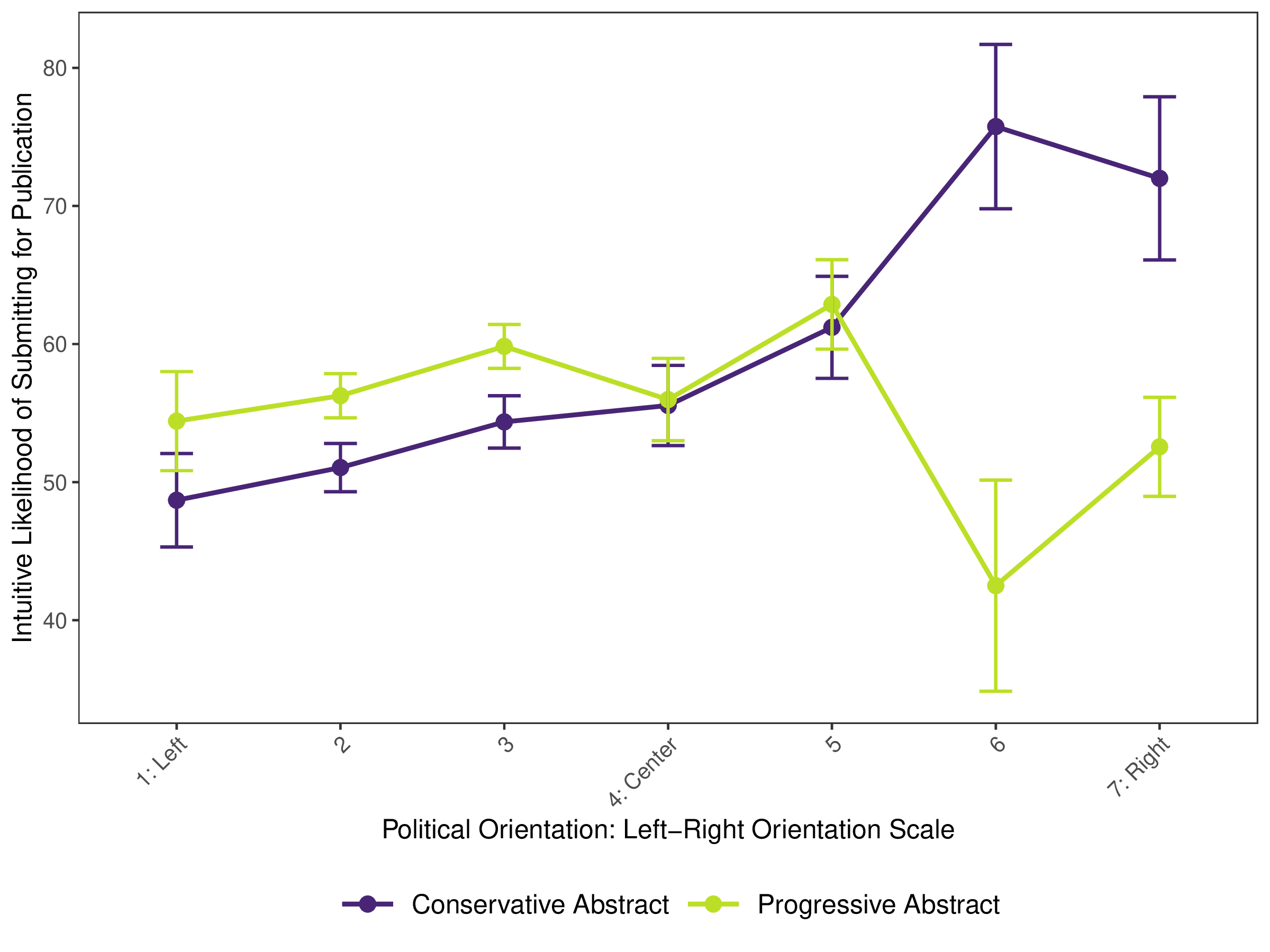
We found a significant interaction between an abstract’s political stance and a historian’s political orientation ($b = 1.82$, $p < .001$). Right-leaning historians rated conservative abstracts higher (ILoS = 65.6) than progressive ones (57.2), left-leaning historians rated conservative abstracts lower (52.1) than progressive ones (57.5), and moderates showed no preference.
Overall, progressive abstracts were rated 3.07% more favorably—reflecting the predominantly left-leaning composition of our sample.
Deliberation does not reduce bias
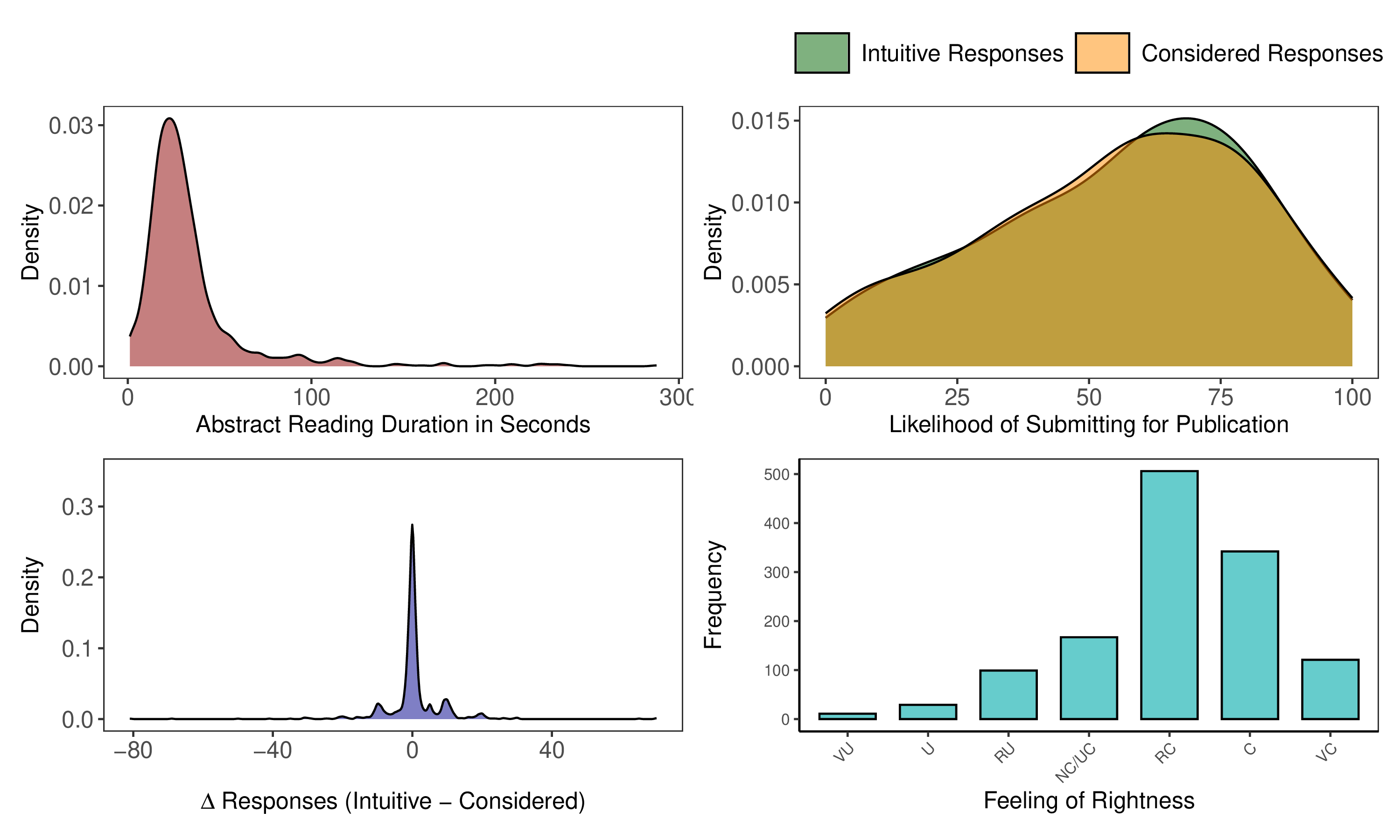
Contrary to our expectation, the Type 2 (considered) responses did not significantly differ from the Type 1 (intuitive) responses. The interaction of political stance and political orientation on response change ($\Delta$LoS) was not significant ($b = 0.11$, $p = .547$). Even when given time to reflect, historians did not revise their politically influenced judgments.
Feeling of Rightness was likewise unaffected by political congruence ($b = 0.02$, $p = .334$), suggesting that political preferences in this context do not trigger the metacognitive conflict that typically prompts re-evaluation in logical reasoning tasks.
Discussion and implications
For metascience: Our findings indicate that political preferences are associated with publication decisions in historiography—a domain where such biases are discussed theoretically but have rarely been tested experimentally. Deliberation did not attenuate this effect in our data
For historiography: If publishability ratings depend partly on political preferences, this could affect which perspectives are more or less likely to be submitted for publication. This parallels the file drawer problem in quantitative science but operates through political rather than statistical dimensions.
Broader relevance: Our study can be viewed as a case study focused on historians; such political preferences are likely relevant in other academic disciplines and should be investigated further
If you find this work useful for your research, please consider citing our paper:
@article{schiekiera2025partisan,
  title={Is Partisan Bias Present in Historiography? An Experimental
         Investigation of Preferences for Publication as a Function
         of Political Orientation},
  author={Schiekiera, Louis and Niemeyer, Helen},
  journal={F1000Research},
  year={2025}
}
📄 Read the paper here
📝 View the preregistration on OSF
💻 View the code and data on GitHub